 Reviews

 Proudly American

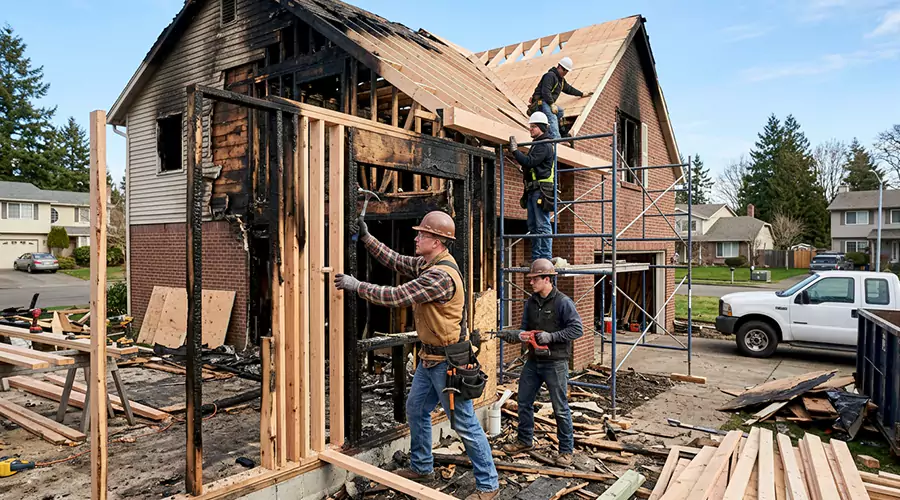
Fire damage reconstruction includes rebuilding the parts of a property that cannot be restored through cleaning alone after a fire. It usually begins after the structure is safe, soot has been removed, firefighting water has been dried, and damaged materials have been taken out. As part of fire water mold restoration, reconstruction helps address structural damage and restore the property to a safe, usable condition.
Reconstruction is the repair phase that follows emergency cleanup. The work can range from replacing a small section of drywall to rebuilding rooms with damaged framing or flooring.
When Does Fire Damage Reconstruction Begin?
Reconstruction begins after the property has been stabilized and the damaged area has been fully assessed. Cleanup should come first because new finishes should not cover soot or unstable materials. Firefighting water can also delay rebuilding until affected wood and wall cavities are dry.
A typical sequence is:
- Confirm structural safety.
- Remove standing water when present.
- Clean soot and smoke residue.
- Remove unsalvageable materials.
- Dry wet structural components.
- Develop the repair scope.
- Begin reconstruction.
What Building Materials May Need Replacement?
Materials are replaced when heat, smoke, water, or physical damage has made them unsuitable to keep. The extent of replacement depends on how far the fire spread and whether nearby rooms were affected by suppression efforts.
Common reconstruction items include:
- Drywall
- Insulation
- Flooring
- Trim
- Cabinets
- Doors
- Ceiling materials
- Damaged framing
Fire damage repair may involve only finishes after a small fire. A larger loss can require structural work before cosmetic surfaces are installed.
Does Reconstruction Include Structural Framing?
Yes, when framing has been charred or weakened enough to require repair. Structural work may involve replacing damaged studs or joists. Roof components can also require repair when flames or heat reach the upper structure.
| Fire Condition | Possible Reconstruction |
|---|---|
| Surface smoke only | Cleaning and refinishing |
| Burned drywall | Panel replacement |
| Damaged wall studs | Framing repair |
| Burned roof members | Roof framing reconstruction |
| Major structural loss | Partial or extensive rebuild |
Structural fire damage should be resolved before insulation or drywall closes the cavity.
Does Fire Reconstruction Include Drywall and Ceilings?
Yes. Drywall is commonly replaced when it has been burned, heavily contaminated, or saturated with firefighting water. Ceiling panels may also require removal when they have sagged or when wet insulation remains above them.
Drywall reconstruction may include:
- Replacing damaged insulation.
- Installing new wallboard.
- Taping the joints.
- Applying joint compound.
- Matching existing texture.
- Priming and painting.
What Happens to Flooring After a Fire?
Flooring may need cleaning, refinishing, or replacement depending on the damage. Smoke residue alone may be removable from hard surfaces. Firefighting water can create a different problem by causing wood to swell or damaging material beneath the finished floor. Carpet may need replacement when heavy soot or contaminated water reaches the backing and padding. Hardwood may sometimes be restored after drying if the boards remain stable. Fire restoration damage can therefore involve materials that were never directly burned.
Are Electrical and Plumbing Repairs Part of Reconstruction?
They can be. Electrical wiring may need evaluation when fire or heat affects outlets or concealed circuits. Plumbing repairs can also become part of the rebuild when pipes were damaged by heat. Fire and water restoration can involve both systems when suppression water reaches electrical areas or damaged plumbing contributes to the loss.
Does Reconstruction Include Smoke Odor Removal?
Odor treatment usually begins before reconstruction rather than after it. Source cleaning should remove soot and contaminated material before new finishes are installed. Covering smoke residue behind new drywall can leave odor inside the structure.
Smoke odor can remain in:
- Unfinished framing
- Insulation
- Wall cavities
- Cabinets
- Subflooring
- HVAC components
Fire and smoke damage restoration may include additional cleaning before the reconstruction phase begins.
How Long Does Fire Damage Reconstruction Take?
A small reconstruction project may take a few weeks, while a moderate multi-room rebuild can take one to three months. Major structural rebuilding can extend six to 12 months or longer. Material availability and structural work can affect the schedule.
| Reconstruction Scope | Typical Planning Time |
|---|---|
| Minor room repairs | 2 to 6 weeks |
| Moderate multi-room rebuild | 1 to 3 months |
| Extensive structural reconstruction | 6 to 12 months+ |
What Can Delay Fire Reconstruction?
Delays often happen when hidden conditions are discovered after damaged finishes are removed. Wet framing may need more drying time. Structural permits or engineering can also add time to larger projects.
Common delays include:
- Hidden water damage
- Additional framing damage
- Permit review
- Material backorders
- Insurance scope changes
- Custom finish matching
What Can You Check Before Reconstruction Starts?
You can review whether the affected area is ready to be closed. New finishes should not cover visible soot or damp structural material.
Before work begins:
- Confirm that fire-damaged materials have been removed.
- Check that firefighting water has been dried.
- Review the planned repair areas.
- Ask whether structural repairs are complete.
- Confirm that smoke residue was cleaned before enclosure.
When Should You Call a Professional?
Professional reconstruction is appropriate when fire damage involves structural framing or electrical systems. Large projects may also require coordination among several trades and permit inspections.
Professional help is especially important when:
- Load-bearing framing was burned.
- Roof structure is damaged.
- Electrical wiring was exposed to heat.
- Several rooms need rebuilding.
- Firefighting water entered wall cavities.
- Structural permits are required.
- The rebuild scope remains unclear.
Emergency fire restoration should stabilize the property first. Reconstruction then addresses permanent repairs.
How Can Problems Be Avoided After Reconstruction?
The best protection is to verify that cleanup and drying are complete before new finishes are installed. Smoke residue or trapped moisture can create recurring odor or staining after the room looks finished. Watch repaired areas afterward for returning stains or unusual flooring movement. Recurring smoke odor also deserves attention.
Conclusion
Fire damage reconstruction is the rebuilding stage that follows stabilization, cleanup, and drying. It can include structural framing repair plus drywall and flooring work. Building systems may also require repair. The exact scope depends on what could not be safely restored after the fire. If structural or electrical damage is present, qualified professional assessment should guide the rebuild before damaged areas are enclosed.
Frequently Asked Questions
Is fire damage reconstruction the same as fire cleanup?
No. Cleanup removes soot or damaged debris. Reconstruction rebuilds materials that could not be saved.
Does reconstruction include painting?
Yes, when repaired drywall or ceilings need new primer and finish coatings.
Can smoke-damaged framing remain in place?
Sometimes, if it remains structurally sound and can be cleaned successfully. Charred or weakened framing may need repair.
Does insurance determine what gets reconstructed?
Insurance coverage can affect payment, but the physical repair scope should reflect actual damage and policy terms.
Can reconstruction begin before smoke odor is removed?
It should not cover untreated contamination. Source cleaning should be completed before new finishes hide affected materials.
Is water damage repaired during fire reconstruction?
Yes, when firefighting water damages flooring or structural materials that require rebuilding.